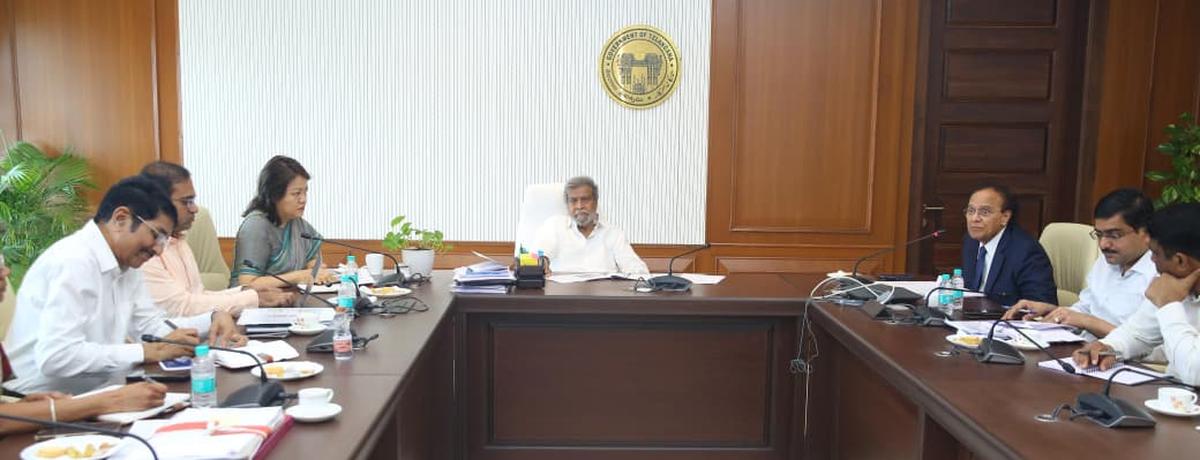
The exhausting journey to Hyderabad for routine chemotherapy is finally ending for thousands of cancer patients. Health Minister C. Damodar Raja Narasimha announced on Tuesday that the Telangana government has established functional day-care chemotherapy units across all 33 districts, anchoring the decentralised push to a state portal that has logged 35,000 cancer cases.
Patients will no longer have to travel hundreds of kilometres every few weeks for cyclical drug infusions. Under the operational structure, tertiary teaching hospitals—including the Nizam’s Institute of Medical Sciences (NIMS) and MNJ Cancer Hospital—will establish preliminary staging, pathology, and therapy protocols. Once stabilised, patients receive their follow-up infusions at their nearest district headquarters. Health teams are now mapping each patient geographically to run timely checkups and minimise dropouts during treatment.
Recording cases through a formal registry transforms how oncologists track disease patterns. Renowned oncologist Dr. Nori Dattatreyudu, advisor to the Telangana government on cancer care, pointed out that declaring cancer a notifiable condition sharpens institutional surveillance. Effective tracking identifies cluster pockets, treatment compliance gaps, and late-stage diagnostic delays before they escalate into avoidable mortalities.
Prevention remains the first line of defence. State health workers have already administered Human Papillomavirus (HPV) vaccines to 2.3 lakh eligible girls out of a targeted 3.4 lakh cohort—achieving a 67% coverage rate against cervical cancer. Dr. Nori pointed to early detection clinics and primary screening drives as necessary counterweights to hospital overload, giving patients a viable shot at curative intervention rather than late palliative rescue.
To ease long-term pressure on Hyderabad's premier wards, the government has launched work on new Regional Cancer Centres across interior zones. Raja Narasimha instructed district medical officers to audit medical supplies, install specialized infusion chairs, and eliminate equipment deficits immediately, ensuring that no cancer patient is turned away from a district ward.