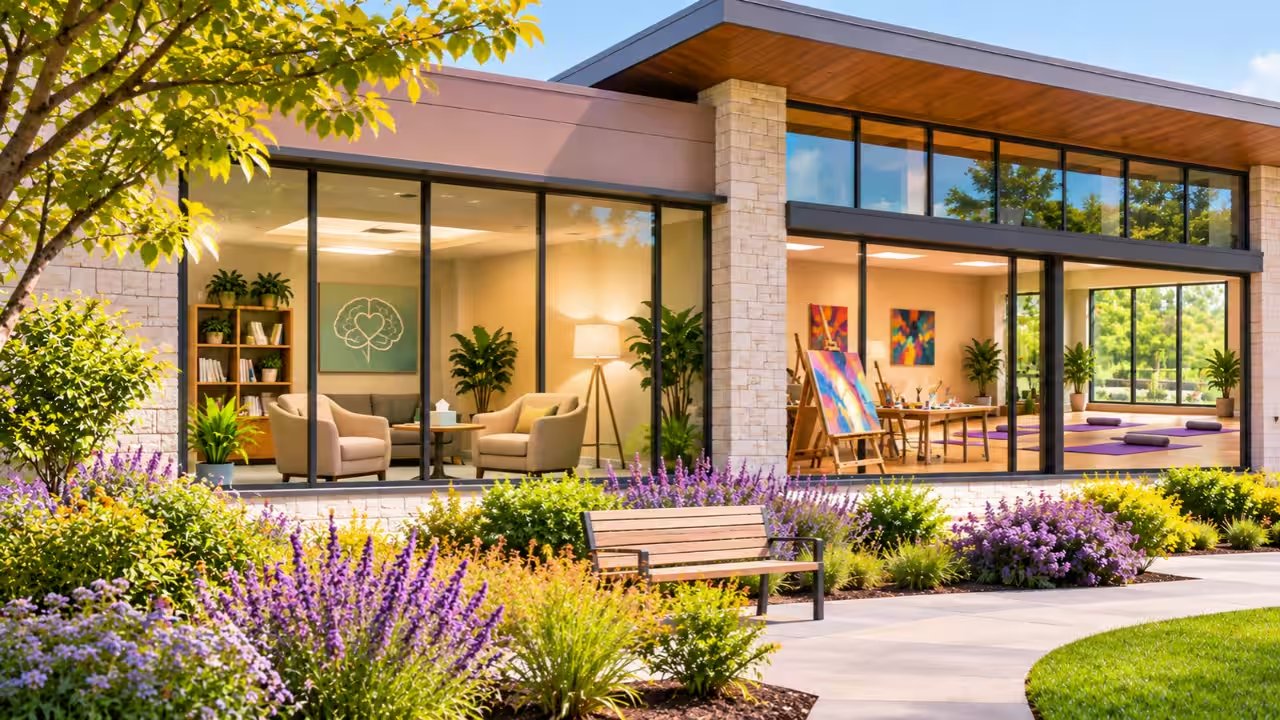
Prince George’s County has cleared a $30 million investment to transform the Temple Hills Community Centre into a specialized mental health sanctuary in partnership with the Boris L. Henson Foundation. Free care for every resident. The facility will blend clinical psychological services with creative movement—anchoring programs in yoga, art, and hip-hop therapy under the leadership of actress Taraji P. Henson's advocacy group.
Funding comes straight from municipal accounts. County officials transferred the entire $30 million allocation from the Maryland-National Capital Park and Planning Commission’s capital budget to bankroll the physical conversion in Temple Hills, Maryland. Shovels hit the dirt in 2026. Once operational, the center will dismantle financial barriers to treatment, admitting local families through its doors without co-pays or upfront fees.
The programming model merges creative expression with clinical intervention. Instead of routing patients through sterile clinics, the center adapts therapeutic workshops developed during the foundation's recent Can We Talk? wellness summits and youth symposiums. Local youth and working adults will have access to guided breathwork, expressive fine arts, and rhythm-based hip-hop therapy—an emerging modality that clinicians use to unpack trauma and chronic stress through lyrical writing and structured sound.
Seniors will receive dedicated care. County planners designed the schedule to counter persistent social isolation among aging residents, offering communal health workshops to curb the cognitive and cardiovascular risks tied to loneliness. County Executive Aisha Braveboy noted that families routinely struggle to find licensed professionals when routine pressure turns into severe anxiety. An open neighborhood hub, Braveboy emphasized, provides residents the confidence to walk in and seek immediate stabilization before personal crises deepen.
Yet county officials insist the project addresses an urgent systemic emergency. Council Chair Edward Burroughs III argued that shifting national economic conditions have driven up rates of chronic trauma, exhaustion, and despair across residential neighborhoods. Burroughs, working alongside Park and Planning Commission Chairman Darryl Barnes, pushed the funding reallocation through administrative channels to anchor mental healthcare directly in the community. As planning phases advance toward the 2026 construction target, the county plans to run the facility as a public model for preventative, zero-cost mental health relief.