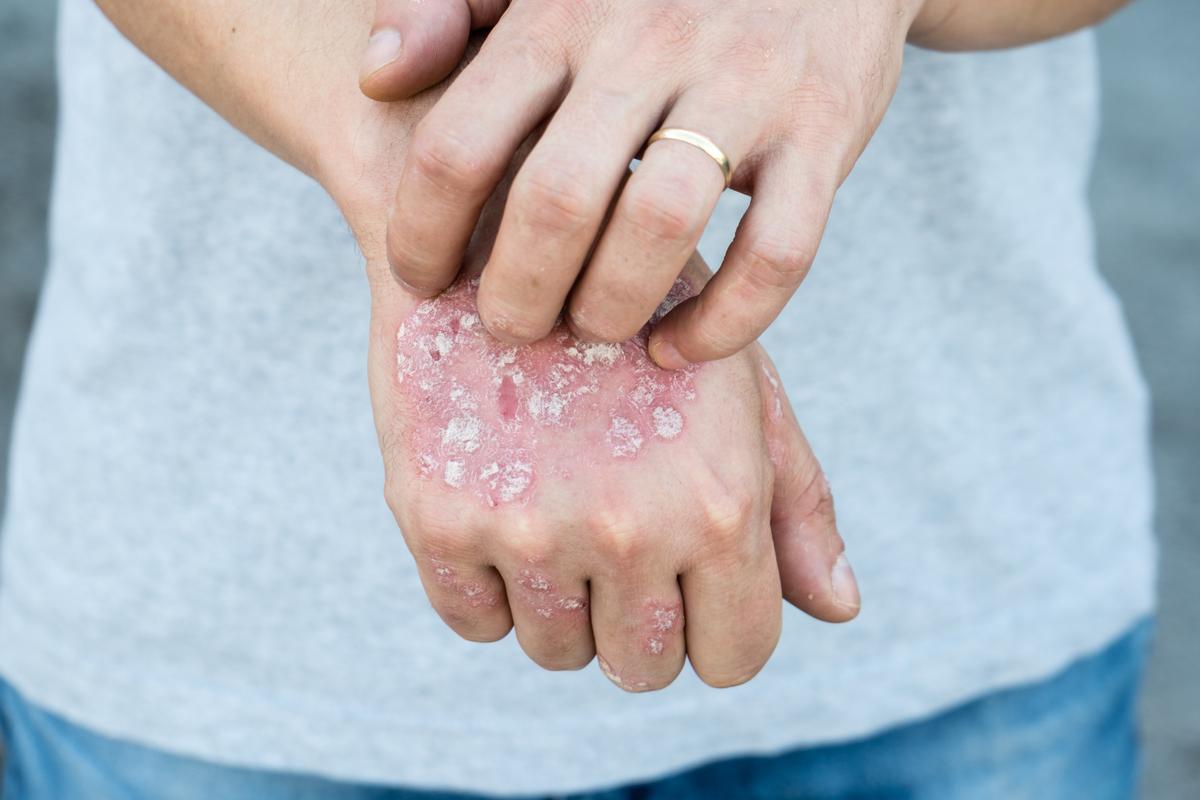
It rarely looks identical twice.
Psoriasis is a chronic autoimmune condition that triggers thick, scaly plaques on the surface of the skin. Yet millions walk around for months—sometimes years—without a confirmed diagnosis. The reason comes down to anatomical geography. The disease does not present uniformly across the human frame. What erupts as an obvious raised silvery plaque on an elbow can look entirely unrecognizable when it takes root on the scalp, the palms, or under the fingernails.
On the scalp, patients routinely brush it off as aggressive dandruff. On the hands, it frequently gets misread as stubborn occupational eczema. Beneath the nail bed, clinicians and sufferers alike mistake the yellowing, pitted decay for a run-of-the-mill fungal infection. In each scenario, standard over-the-counter shampoos and anti-fungal ointments fail. The flare-ups persist.
Why does an identical autoimmune malfunction produce such radically divergent symptoms? Skin thickness varies dramatically across the body. The tough, calloused epidermis of a working palm bears little resemblance to the delicate dermal architecture of the ear canal or groin. Environmental exposure shifts the equation further. Hands face constant friction, repeated handwashing, and abrasive detergents. Scalps endure trapped heat, sebum, and hair follicles. Each distinct environment alters the moisture profile, disguising the underlying autoimmune inflammation under thick hyperkeratotic crusts or raw fissures.
Even high-profile figures struggle with the physical demands of management. Rock musician Liam Gallagher has managed severe psoriasis flare-ups for decades, at times wearing protective gloves to shield his hands during severe attacks alongside recovery from joint surgery. For severe presentations—such as verrucous psoriasis or rare palmoplantar variations—the physical barrier becomes both painful and disfiguring.
The American Medical Association notes that misdiagnosing localized bumps or thick palm lesions delays targeted systemic intervention. Psoriasis is an internal immune cascade, not merely a cosmetic inconvenience on the epidermis. When surface treatments fail to clear an irritated patch after several weeks, a clinical biopsy or evaluation by a board-certified dermatologist remains the only reliable route to halt progression.