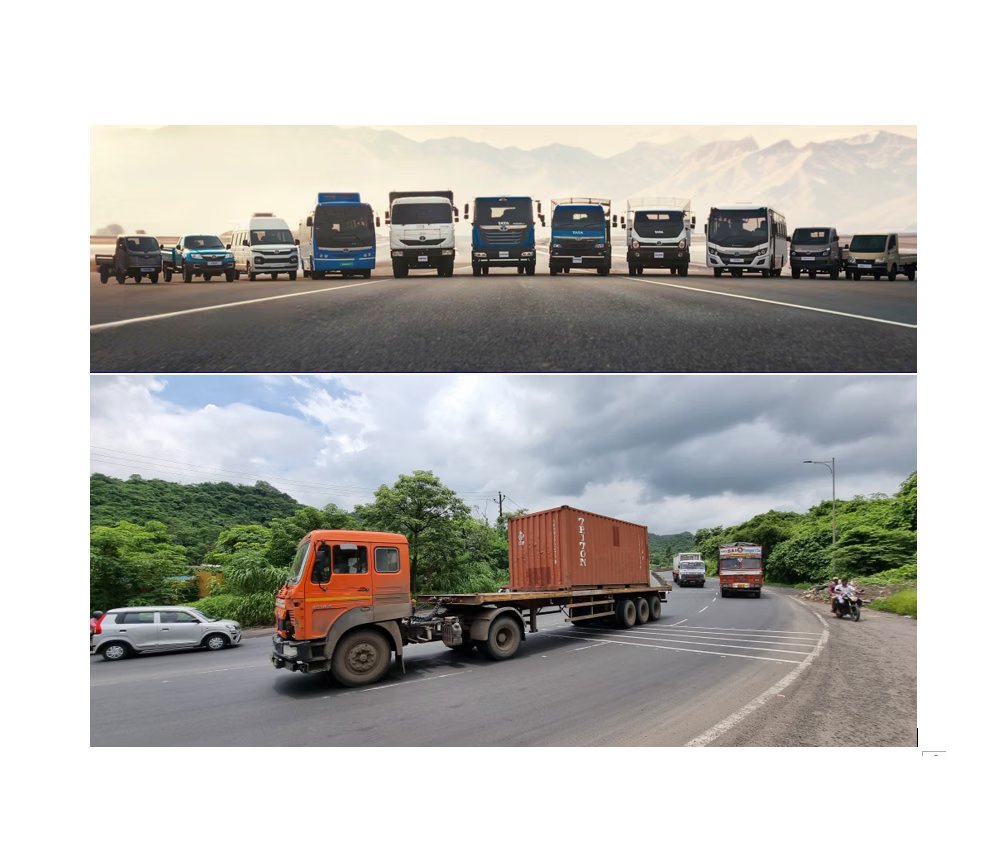
1 In the first six months of FY2027, Tata Motors shipped a staggering 200,452 commercial vehicles, pushing its annual average past the 200,000‑unit mark for the second time since 2019. That figure translates into a 35% slice of a market that grew 24% YoY to 574,255 units across 17 OEMs.
2 The jump to 200,452 units is a 28% surge over the 156,973 units recorded in H1 FY2026, and it lifts Tata’s share from 34% to 35%—a modest but meaningful edge in a fiercely competitive segment. While the overall market weight is still dominated by the light‑commercial‑vehicle segment, Tata’s heavy‑goods‑vehicle and medium‑bus lines have been the real growth engines.
3 Ashok Leyland trails closely, with 139,882 heavy‑goods‑vehicle units and 92,561 medium‑bus units in the same period, yet Tata outpaces it with 89,057 heavy goods units and 11,096 medium‑bus units. Mahindra & Mahindra’s small‑bus and goods‑carrier numbers—400‑plus thousand in total—remain the third tier, but Tata’s 28% share in the small‑bus sub‑segment surpasses the Mahindra‑led 26%.
4 The spike is underpinned by several macro drivers: a 53% share of a record FY2026 sales volume, sustained infrastructure spending, rising e‑commerce freight, and government orders for intercity transit. Commodity price volatility and diesel cost hikes are noted concerns, but the current base of high‑end freight usage keeps the momentum alive.
5 For buyers, the data means Tata’s CVs are proving resilient amid market swings, and the brand’s expansion into heavy‑goods vehicles could translate into better service networks and parts availability. Keep an eye on the upcoming fiscal year’s launch calendar—Tata plans to roll out a new heavy‑goods platform in Q3 2027, potentially reshaping the competitive map.
6 As the industry moves toward electrification, Tata’s current sales trajectory sets a benchmark for future EV adoption in the commercial space. The next wave of policy incentives around green logistics will likely accelerate the shift, making the 2028‑2029 period a critical window for buyers to lock in fleet upgrades.