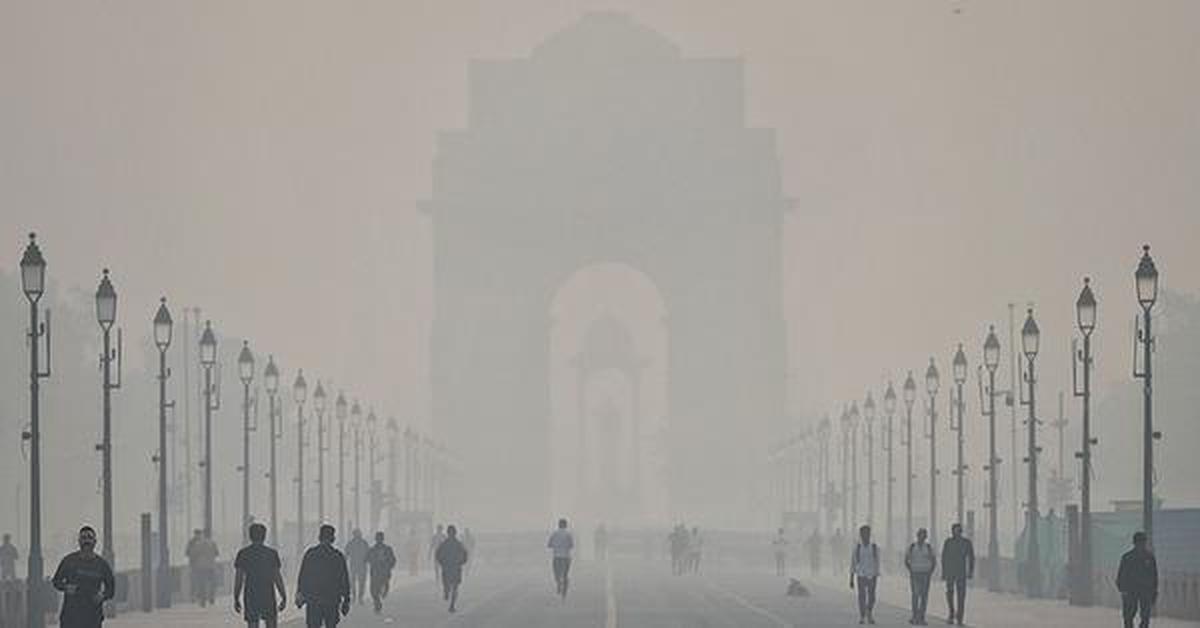
Thick toxic smog tightened its grip across the national capital on Wednesday morning, November 4, 2026, sending air quality tumbling deep into hazardous territory. The Central Pollution Control Board (CPCB) registered Delhi’s 24-hour average Air Quality Index (AQI) at 379 at 9 a.m., placing the city firmly in the "very poor" bracket. But conditions turned far worse in specific neighborhoods. Seven major residential and commercial hubs crossed into the "severe" category, where airborne contaminants overwhelm normal lung defenses. The medical assessment from the CPCB is unequivocal: air at this level actively sickens healthy people and delivers dangerous complications to those managing pre-existing respiratory or cardiac illnesses.
Smog engulfed key transit corridors and residential sectors alike. CPCB monitoring stations logged "severe" readings across ITO, Dwarka, Rohini, Punjabi Bagh, Alipur, Bawana, and Jahangirpuri. Regional satellite towns offered no respite. Noida, Gurugram, and Panipat woke to thick, particulate-heavy air that also clocked into the "very poor" band, locking millions of commuters across north India into an unbroken corridor of grey haze.
A seasonal collision of weather and emissions drives the crisis. Plunging temperatures and slack winds across the Indo-Gangetic Plains create an atmospheric inversion lid, pinning exhaust, construction dust, and local particulates close to the pavement. Farm stubble burning throughout October and November, combined with festive firecrackers, injects heavy loads of soot into this trapped air layer, multiplying the toxic load.