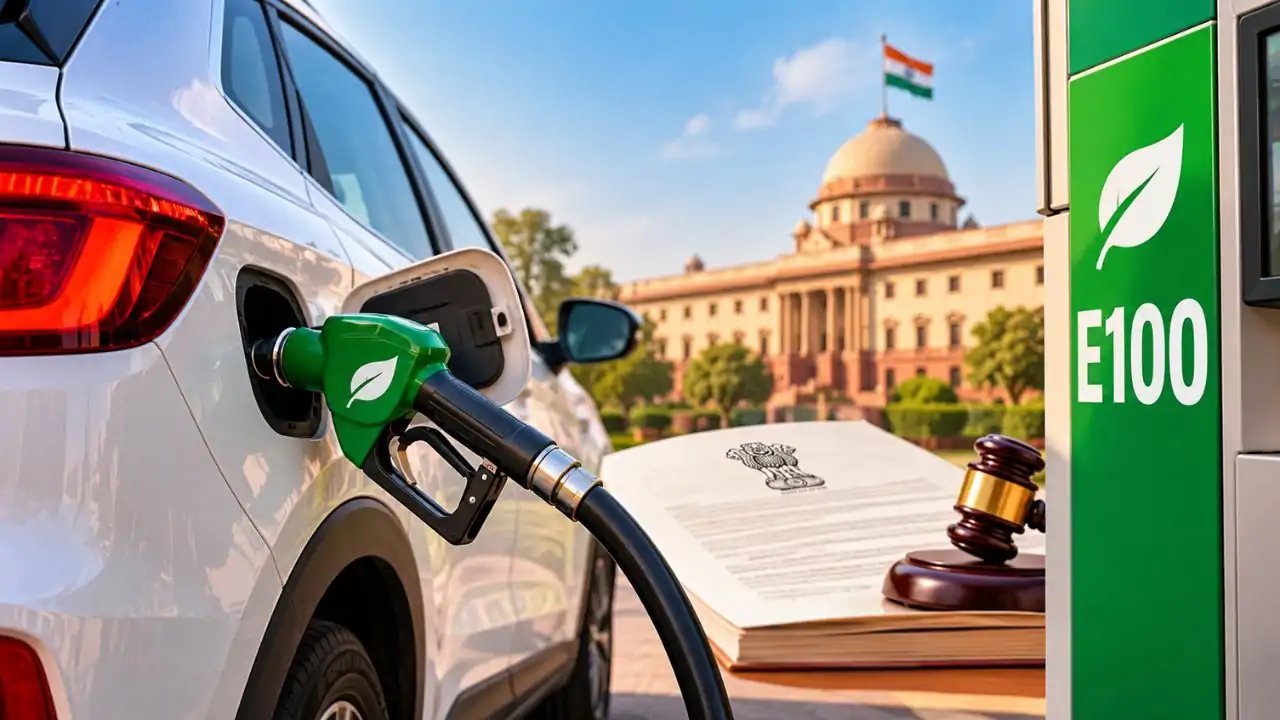
India has approved the use of up to 100% ethanol (E100) in flex‑fuel cars. Only vehicles that are specifically designed and certified for high‑ethanol blends can tap into this new fuel mix.
Ethanol blends are expressed as E20, E85, E100. E20 is 20% ethanol and 80% petrol, already common. E85 is 85% ethanol, 15% petrol. E100 is nearly pure ethanol, requiring special engine tuning—engines must handle lower energy density and higher oxygen content.
The first car to get this clearance is the Maruti Suzuki Wagon R Flex Fuel, which can run from E20 to E100. Other manufacturers like Toyota, Tata Motors and Hyundai are already developing their own flex‑fuel models. The weight threshold for light petrol and diesel vehicles has also been lifted from 3,000 kg to 3,500 kg, easing compliance for heavier commercial vehicles.
For buyers, the key takeaway is simple: if your car isn’t marked ‘Flex‑Fuel’, don’t try E85 or E100. You’ll notice a drop in mileage—ethanol contains about 10 % less energy per litre than petrol—so a flex‑fuel car usually burns a few extra litres to cover the same distance. Check the fuel cap and owner’s manual; if you’re unsure, ask the dealer before you buy. Availability of E85/E100 pumps is still patchy, so a certified model’s benefit depends on local refuelling infrastructure.
The policy fits into a larger drive to cut import dependence on crude oil, a move that has gained urgency after the Middle East conflict. The government also relaxed certain emission rule thresholds to accommodate the new fuel blends, giving manufacturers more room to tweak powertrains for ethanol‑rich fuels.
The amendment was announced in July 2024, and manufacturers can now begin delivering E100‑capable models. Dealers should prepare for a gradual rollout of E85/E100 pumps across major cities, giving buyers a clearer picture of when they can actually use the new fuel mix.